
Children are three times more likely to require medical help for asthma during the back-to-school period.
Preparing for the September peak
Each year a predictable rise in asthma exacerbations, known as the September asthma peak, results in a spike of emergency room visits and hospital stays compared to any other month.1 This particularly affects school-age children. 2 This article explores the preparation tips to help your patients get ready during the summer to help better manage their condition ahead of the September peak.
Understanding the September peak
The start of the school year coincides with several risk factors that contribute to the seasonal spike in asthma exacerbations:
- Increased respiratory viral infections, particularly the common cold (rhinovirus), which is known to trigger asthma attacks 1-3
- Lapsed medication routines, often due to reduced adherence over summer.4,5
- Environmental triggers, such as pollen carryover, indoor allergens, and colder air.1-3
- Stress and routine disruption, especially in children adapting to new environments or experiencing anxiety about the new school year.1,2
In England alone in 2023, the total number of emergency hospital admissions for asthma in 5-14 year olds jumped by 348% from August to September.6 Children are three times more likely to require medical help for asthma during the back-to-school period.5
Preparing your patients for the September peak
With the timing of this seasonal spike being so consistent, early intervention is key in managing your patient’s condition most effectively. Forward-planning asthma reviews, particularly in children, can help identify key symptoms, get their condition under control, and help reduce their risk of an asthma attack.4
These appointments also provide an opportunity to update and reinforce asthma action plans, assess current medication regimens, and adjust treatment where needed.1,2,4,5 In addition, they provide the opportunity to review inhaler technique and discuss options for avoiding common triggers.2,5
Incorporate FeNO testing into assessments
FeNO testing offers an objective insight into underlying airway inflammation, helping to improve diagnosis of asthma and optimise management.7 Elevated FeNO levels signal a greater risk of exacerbations, and can guide ICS initiation or titration, monitor adherence and personalise treatment.7-9
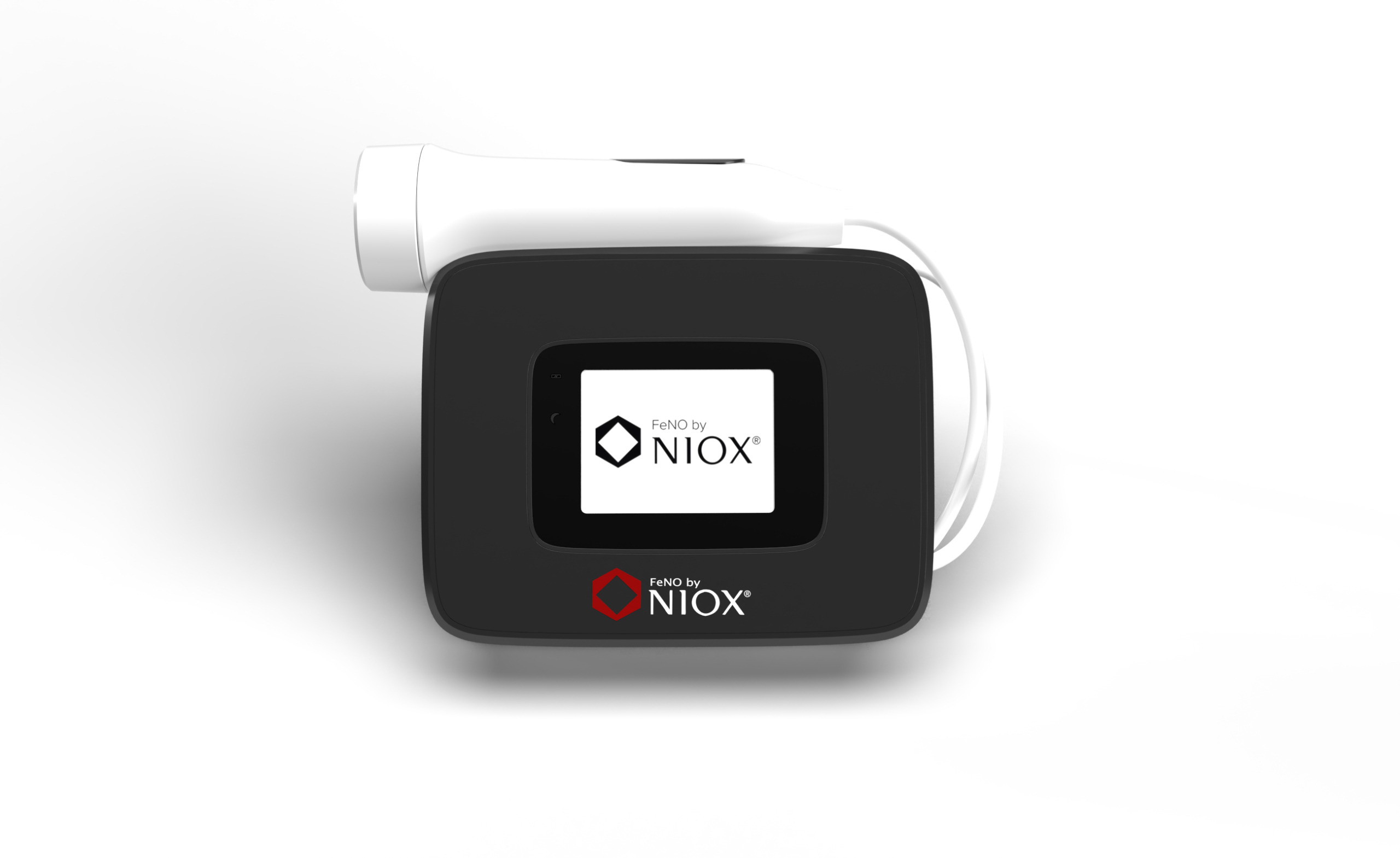
The September asthma peak is predictable – but with timely intervention, healthcare professionals can help reduce the burden of seasonal exacerbations. Incorporating the NIOX VERO® into your clinical care can optimise diagnosis and guide treatment, right at the point-of-care.10,11
What is the September peak?
Each September, asthma exacerbations surge (especially in school-age children) due to a variety of different factors, including viral infections, environmental triggers, and missed medications. a-c
Forward-planning asthma check-ups help assess symptom control, update action plans, and reduce the risk of seasonal exacerbations. a-c
Incorporating FeNO testing into reviews could help predict risk of exacerbations, assess adherence, as well as guide and tailor treatment. d,e
Looking to enhance your asthma care?
Experience the gold standard FeNO testing device, NIOX VERO®, trusted by thousands of healthcare professionals worldwide.10 Book a demo today to see how FeNO by NIOX® could be integrated into your care, or request a personalised quote using our quick and easy quotation tool.
References
- Asthma and Allergy Foundation of America. The September Asthma Peak. 2024. Available at; https://aafa.org/asthma/living-with-asthma/september-asthma-peak-month/
- Allergy and Asthma Network. 10 Ways to Stay Healthy During the September Asthma Peak Week. 2023. Available at; https://allergyasthmanetwork.org/news/10-ways-to-stay-healthy-during-september-asthma-peak/
- Johnston, N. W., Johnston, S. L., Duncan, J. M., Greene, J. M., Kebadze, T., Keith, P. K., Roy, M., Waserman, S., & Sears, M. R. (2005). The September epidemic of asthma exacerbations in children: a search for etiology. The Journal of allergy and clinical immunology, 115(1), 132–138. Available at; https://doi.org/10.1016/j.jaci.2004.09.025
- Asthma and Lung UK. Charity warns of back to school asthma spike. 2024. Available at; https://www.asthmaandlung.org.uk/media/press-releases/charity-warns-back-school-asthma-spike
- NHS England. NHS warning to parents as ‘asthma season’ hits. 2019. Available at; https://www.england.nhs.uk/2019/09/nhs-warning-to-parents-as-asthma-season-hits/
- Asthma+Lung UK. Number of children in hospital with life-threatening asthma attacks could quadruple as they return to school. 2024. Available at: https://www.asthmaandlung.org.uk/media/press-releases/number-children-hospital-life-threatening-asthma-attacks-could-quadruple-they
- Loewenthal L et al. FeNO in asthma. Semin Respir Crit Care Med. 2022;43:635-645
- Busse W et al. Baseline FeNO as a prognostic biomarker for subsequent severe asthma exacerbations in patients with uncontrolled, moderate-to-severe asthma receiving placebo in the LIBERTY ASTHMA QUEST study: a post-hoc analysis. The Lancet Respiratory Medicine. 2021;9(10):1165-73.
- Porsbjerg C et al. Asthma. The Lancet. 2023.
- Carroll WD. NIOX VERO: Individualized Asthma Management in Clinical Practice. Pulmonary Therapy. 2016;2:171-88.
- Price DB et al. Fractional exhaled nitric oxide as a predictor of response to inhaled corticosteroids in patients with non-specific respiratory symptoms and insignificant bronchodilator reversibility: a randomised controlled trial. Lancet Respir Med. 2018;6(1):29-39.
- NIOX® Data on File; MKT-DOF-007. 2024.